After several years of unclear direction, Barbara Muckermann
aims to take a more defined and bold direction for Europe’s iconic luxury
brand.
GENEVA, Switzerland – “Brace yourself because we are going to present to the board
an organic plan and a bold plan because this brand deserves it.”
That is the strong message Kempinski Hotels CEO Barbara
Muckermann delivered this week while talking to Hotel Investment Today. It's what
she knows is required and is not afraid to deliver.
Muckermann took over in June a European luxury brand that
has been through a lot of upheaval ever since past-CEO Reto Witter unceremoniously
left the Geneva-based organization in 2014. Since then, multiple CEOs have come and gone at
one Europe’s only true luxury hotel brands that deserves better.
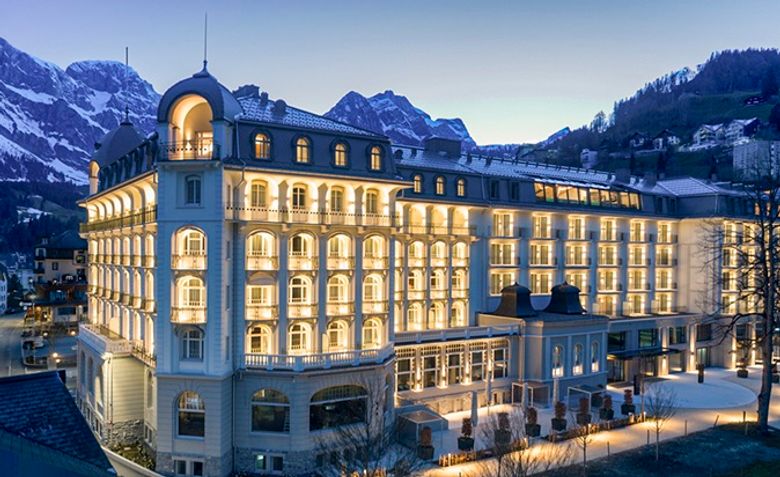
Kempinski Palace Engelberg, Switzerland
The owner, the Bahrain royal family, made a significant
statement about making change by naming a woman and a luxury outsider as its
new CEO. Muckermann, outspoken and honest about the brand’s position, previously
spent 25 years in the luxury cruise industry and has experience with American
public companies and luxury retailers. But she is new to the hotel world and is
in the process of collecting her data and intelligence to create a plan to
recalibrate the business that today operates 82 luxury properties in 36
countries, mostly in Europe, the Middle East and China. Kempinski also has a
pipeline of 34 hotels that Muckermann said will be reevaluated as she strives
to raise the bar and remake the brand with German heritage as a global luxury player
to be reckoned with.
When she presents her new direction by December, the
strategy will include a renewed focus on North America, she said.
“You can only be a luxury brand if you’re truly global.
Today, there is no national luxury brand – that doesn’t exist,” an upbeat and
excited Muckermann said. “The North American market is both from a source and a
destination market, the largest market in the world. You cannot exist without
North America. The problem that I haven’t solved yet is that if you want to be in
North America, you need two things: a unique angle and scale. In North America,
you cannot go half pregnant. You need to have a full-fledged plan with big
investments. Then you come in and do it. And before even thinking about coming
in, you need to know the angle. I’m looking for that. I don’t have the answer
today, but maybe by our next interview I will.”
Measuring her words, Muckermann noted that ultra-luxury
hotels should grow at 10% CAGR for the foreseeable future. But she is not sure
that demand will grow at the same level. With ADR already at historical levels,
it does give her reason to pause. “I will not push the button on North America,
but I know that market too well not to be scared of it – in a good way,” she
said. “But what I can tell you is that the day Kempinski enters North America,
it will not be small because it cannot be small.”
Yes, the strategy for growth is going to require investment,
and Muckermann took the job confident she had the backing of its one and only
shareholder.
“If we were to enter North America, you don’t enter it on a
smile, even if you’re a blonde – that doesn’t happen,” she quipped. “So, yes,
anybody who wants to be serious about growing and picking the properties in
North America will need to put equity on the table… I’m very confident of the
support of the family. But at the same time, it would be totally ridiculous for
me to expect a blank check without the plan. Of course, the two things go
together. I committed to present the plan, which is well underway. And when we
present the plan to the board, I am confident that it will have the support.”
As she figures out North America, Muckermann points to
China, where its Nuo and Bristoria brands she believes have a lot of runway for
growth with local partner Beijing Tourism Group (BTG). “China domestic has huge
potential. So, I might actually spend more time on Nuo as I think about my
balance sheet,” she said, adding that Bristoria is very small right now but was
developed for the Chinese market as a “trampoline” to Nuo.
To be clear though, while part of the cleanup and strategic
assessment of the portfolio is going to establish the role of the brands, Muckermann
said her priority will be investing in the Kempinski brand.
Difficult months ahead
Muckermann’s desire to “cleanup” will likely lead to an
initial reduction in hotels, she said, including reconsidering deals that
perhaps shouldn’t have been signed in the first place. “My next months will be
tough, having difficult with some of our owners,” she said. “There are
investments and changes we need to make, and I’m expecting that some of the
owners might not be ready to make them, and that’s fine.”
The move back to pure luxury will be good for the brand
image and its bottom line because it should create a higher multiple on valuations,
Muckermann added.
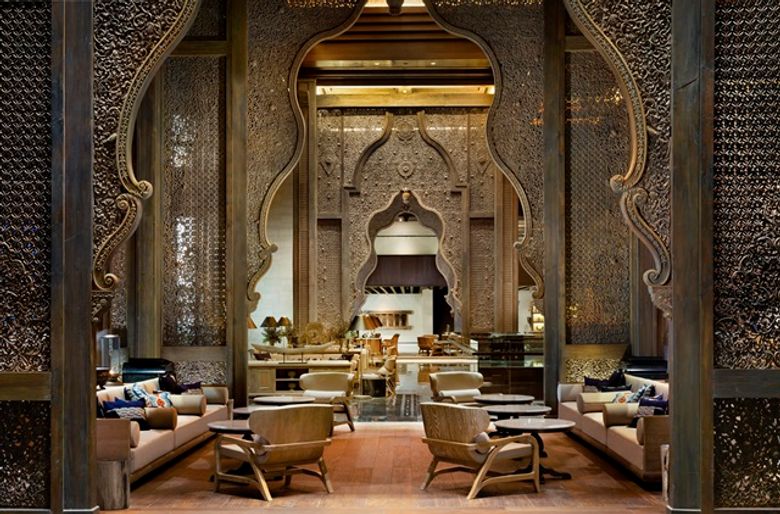
The Apurva Kempinski Bali
“As a niche player, we absolutely don’t have any choice than
to go back to luxury and redefine and refocus and restrengthening our luxury
appeal, using the strength of having our European perspective to make it
different and unique,” she said. “The market only pays for difference and
uniqueness. So, we will be becoming smaller before becoming bigger.”
The recalibration should also lead to the development of
more residential components and Muckermann said a working group is in place to
develop a residence proposition “that can be superior to some of our
competitors.”
Residential should also give Kempinski, predominantly a
management company, greater access to more agile private capital. “I think
residences is another huge area of opportunity that we are currently focusing
on,” Muckermann added. “Strategically, from a Kempinski Hotel perspective, I
would like to see hotels and residences together because it will strengthen
both propositions.”
Bigger picture, however, Muckermann is not without her
concerns about market conditions. “If you take the ADR that you’ve seen in the
last three years and plot that with lowering interest rates, it will look like
a beautiful stretch,” she explained. “That’s the biggest fear that I have at
the moment because I don’t have enough sensitivity in the market yet – enough data
yet – to know when the next bust will be. But I suspect that with a growth of
inventory at over 10% CAGR per year, and even with wealth growing, I’m not sure
that the inventory and the supply is growing in sync with the demand.”
That leads Muckermann to further ponder the right growth
model for the next five to 10 years. “I’m not going to ask for money from my
stakeholders until I figure that piece out,” she said.
Finding the Holy Grail
On top of all of the strategy questions comes what
Muckermann calls a huge responsibility to take charge of a 127-year-old brand
that she grew up with in Germany. “Brand and product building is my pocket of
strength and when Kempinski came along it was like finding the Holy Grail for any
brander,” she said.

There’s been too much change at the head of Kempinski. We have one shareholder who’s fully committed to the company. We have a fully committed board. They chose me, I think, also because they wanted to give a message of change to the market.
Barbara Muckermann
To that end, she said she is going back to the roots of the
brand to find which characteristics remain relevant. “That’s where you really
do a calibration job in pulling up and pushing down brand qualities, depending on
how the market changed, because this strong brand didn’t really evolve as much.”
What is abundantly clear is Kempinski’s affinity for
gastronomy. It is still there, according to Muckermann, but maybe “covered with
dust.”
“We don’t talk about it. We don’t think about it. We don’t
develop it as much,” she continued. “So, this is where I think the role of a
brand custodian will be – go back, find those strong roots and move a little
bit of the resources to make sure that they can shine… My role will be to clean
up the brand attributes, show them to the world and maybe tweak a little bit of
the resources and the narrative. But it’s all there – that’s the amazing piece.”
Muckermann said her style is influenced by spending almost
30 years working for American companies or with Americans. Today, she counts veteran hotel executive Jennifer Fox and Virtuoso's Matthew Upchurch as confidants. “I’m incredibly
transparent. I strongly believe that the best and the most terrible things you
can say can be demystified by discussing them. Any problem becomes manageable,”
said the veteran who started her career in crisis management. “I come from a perspective
where there’s never a problem that’s big enough in luxury hospitality to be
afraid of. Most of our stories are good stories.”
As for being one of the few women in a top hospitality role,
Muckermann thinks it helps because it really shows that the owners strongly want
change for the brand.
“There’s been too much change at the head of
Kempinski,” she added. “We have one shareholder who’s fully committed to the
company. We have a fully committed board. They chose me, I think, also because
they wanted to give a message of change to the market.”