With
the U.S. lagging on regulating net-zero commitments, hospitality pioneers are
opting for sustainable design certification for new green hotels and green
retrofits and say green pays.
INTERNATIONAL
REPORT —In October, America’s first carbon-positive hotel, Populus, opened in
downtown Denver. Beyond its honeycombed sculpted exterior of low-carbon
concrete lies the look of the future, according to developer Jon Buerge,
president at Urban Villages.
For Buerge,
the carbon-positive design of the Chicago-based Aparium Hotel Group-managed
property goes beyond a net-zero hotel’s emissions balancing act.
“By being
carbon positive, the hotel is sequestering — sucking out of the atmosphere —
more carbon than it emits over the lifetime of the building. Not just our
operational carbon footprint but also the embodied carbon footprint from
manufacturing, transportation, installation, maintenance, and disposal of the
materials used to build the hotel.”
Six years in
the making, Buerge said carefully planned sustainable design and construction
techniques significantly helped reduce emissions at the 265-room property
upfront.
According to
the U.S. Department of Energy, buildings are responsible for more than a third
of CO2 emissions in the country, and globally, construction materials account
for around 9% of that.
Denver-based
Urban Villages analyzed every facet of the construction project, said Buerge,
working with the decarbonization experts at STOK, “and calculating the carbon
footprint of every single material used in the building.” Starting with the use
of low-carbon concrete in place of fly ash, he claimed it was the first in the
world, “allowing us to reduce emissions from the concrete by nearly 40%.”
To fit his
vision of “biophilic” nature-centric design favoring sustainable materials,
Chicago-based architects Studio Gang inspired Colorado’s native aspen tree, the
Populus tremuloides, for the hotel’s white trunk-like facade. The firm’s
founding partner, Jeanne Gang, took a hike in the Colorado woods before
visiting the site and said the distinctive spherical windows on the insulated
facade mimic “the eye-shaped marks” on their bark.
A visionary
renowned for the Aqua Tower in Chicago, Gang believes biomaterials such as wood
and mycelium and “innovative concrete technologies” — all of which feature in
the Populus design — are the future for sustainable buildings.
The use of
materials, lights, and textures echoing the natural world extends into the
hotel’s interiors. “Every detail aimed to minimize the building’s carbon
footprint through innovative, consciously sourced materials,” said Heather
Wildman of Pittsburgh-based Wildman Chalmers Design. “From the natural
materials like wood and plants to wall coverings and carpeting.”
Wildman sees
sustainability as a professional responsibility. “Every decision we make about
beautification, we try to make for sustainability.”
ROI
benefits of green design
Many hotel
materials have been salvaged and repurposed, meaning less carbon and less
money. Reclaimed snow fencing from Wyoming ended up in the wood slats on the
lobby ceiling, biodegradable recycled materials in the guest room carpets, and
beetle-killed pine trees in the headboards. Outdoors, the sidewalk benches by
Denver-based landscape architecture firm Superbloom were crafted from honey
locust trees felled during the revamp of the city’s 16th Street Mall, “giving
the trees a second life.”
Populus is
LEED Gold certified by the U.S. Green Building Council (USGBC) for its
sustainable design, construction, and operations. LEED stands for Leadership in
Energy and Environmental Design. The USGBC cites “operating cost savings,
shorter payback periods and increased asset value” as benefits of new green
buildings and green retrofits, with a “rapid” ROI.
To meet its
LEED commitments, Populus relied on 100% renewable electricity sourced from
Colorado wind farms for hotel operations. Zero waste, “food to farm” dining
harnesses BioGreen360’s food cycling technology to turn food waste into compost
for local farmers. Beurge said the development makes “financial sense” on top
of being sustainable, and he’s confident it will be lucrative for investors.
“Using more renewable materials and operating more efficiently does not mean
sacrificing ROI.”
For many, it
increasingly means the opposite. Bardessono Hotel & Spa in Napa Valley was
designed sustainably in 2009. However, it received Platinum LEED certification
in 2016, just after the purchase of Ashford Prime (which later became
Dallas-based REIT Braemar Hotels & Resort). That’s the country’s highest
environmental design standard, said GM Alain Negueloua.
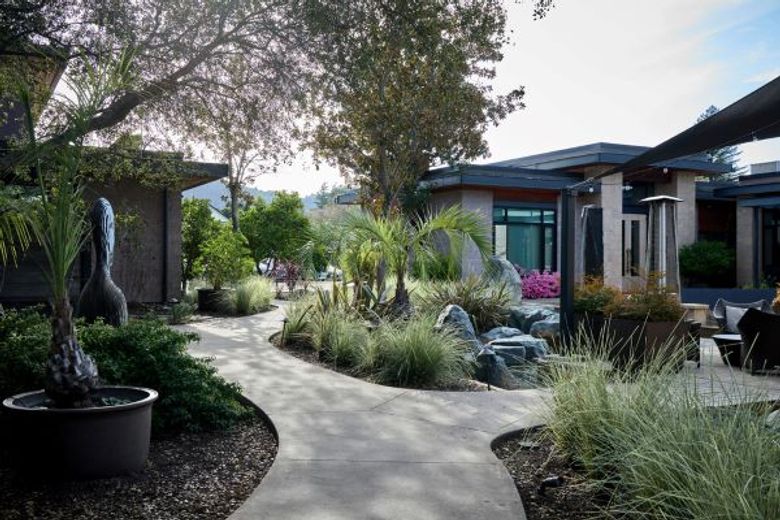
The Bardessono Hotel & Spa in Napa Valley was designed sustainably in 2009.
“Several
factors contributed to this achievement, including our solar-powered heating
and cooling system, energy-efficient lighting that minimizes daytime and
nighttime energy consumption, low-water-use treatment systems, and food waste
composting.”
“The hotel’s
recent renovations continued the commitment to sustainability,” said Negueloua,
adding that’s what many guests come for.
“New suites
were built utilizing salvaged materials such as wood and Tufa stone,” he said.
Being sustainable with the furniture, lighting, area rugs, and bathroom
vanities means “honoring the property’s history and offering an artisanal
aesthetic.”
The USGBC
has been saying for a decade there is a “revenue benefit” from building green,
as it cuts operating and maintenance costs and can lead to 10-20% improvements
in ROI.
Environmental
and financial stewardship
SCP (Soul
Community Planet) Hotels was banking on those savings with a revamp of the
1965-built Salishan Coastal Lodge on the Oregon Coast by “integrating
eco-initiatives into every aspect of its operations,” said Ken Cruse, the
Laguna Beach, California-based firm’s founder and CEO. From LED lighting,
water-saving fixtures, recycled water, and lithium battery golf carts on its
golf course to Ecolab sustainable cleaning products and minimizing in-room
dining waste with reusable containers.
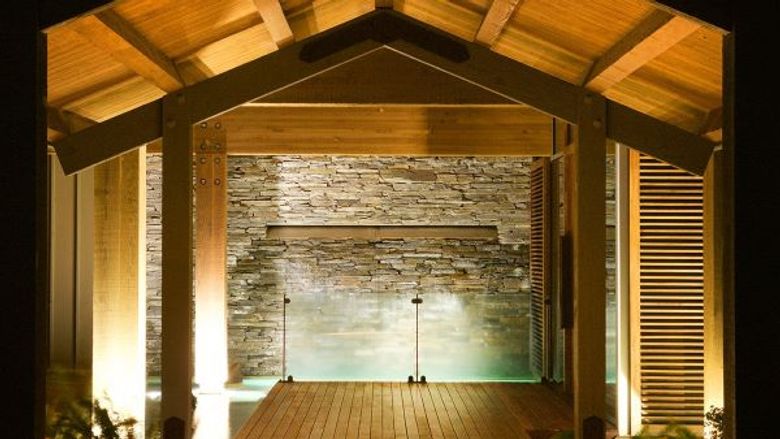
SCP Hotels revamped of the 1965-built Salishan Coastal Lodge in Oregon.
A
certification process under EarthCheck’s building, planning, and design
standards led it to Silver Certified, measuring the resort against best
practice performance benchmarks for sustainability. Salishan rigorously tracks
its energy use, water consumption, waste production, and emissions. It is
partnering with the Lincoln County sanitary district on a commercial composting
pilot program and “actively measuring waste diversion.”
Like Buerge,
Kelly Ogden-Gregg, principal designer at Portland, Oregon-based Elk Collective,
which oversaw the refurbishments, talks about “environmental stewardship” at
Salishan.
“Sustainability
was always at the forefront when the lodge opened its doors 60 years ago,” she
said. “The architecture was designed with a deep respect for its natural
surroundings and reflects clean lines and organic materials.
“Our team
opted for sustainable materials. This commitment allows sustainability and
luxury to coexist effortlessly with thoughtfully designed suites featuring
non-toxic finishes. Prioritizing health and wellness consistently delivers a
greater return on investment than outdated, toxic alternatives.”
For Buerge,
decarbonizing and energy-efficient strategies not only cut costs immediately
but future-proof buildings ahead of more strict regulations, but he believes
more consumer demand and regulatory pressure are needed in the U.S. to
encourage hotels to go through the “very detailed process” of becoming
sustainable.
“It’s a
mindset that we have to get into as well as a technical
challenge,” Gang said. “I think sustainability needs regulation... as architects, we have to
convince our clients to do these things.”